

Introduction
Drugs that affect thyroid function tests are an often overlooked cause of abnormal lab results that do not always reflect true thyroid disease. As a physician and medical educator, I frequently encounter patients who are confused when their thyroid reports appear inconsistent with their symptoms. For example, a patient on lithium may have a raised TSH without actually being hypothyroid, while another taking biotin may show falsely normal results despite clear signs of thyroid dysfunction.
These situations highlight how important it is to understand the interactions between medications and thyroid laboratory tests. Many medications that interfere with thyroid function tests either alter thyroid hormone production and metabolism or directly distort laboratory assays. The result can be misleading numbers, unnecessary worry, and sometimes inappropriate treatment.
In this article, we will explore:
- Common medications that affect thyroid function.
- How some medications can raise or lower TSH levels.
- Rarely discussed insights from real clinical practice
- Practical steps for patients and clinicians to avoid misinterpretation
What are the drugs that affect thyroid function tests?
Drugs that affect thyroid function tests are medications that interfere with the measurement or interpretation of thyroid hormones such as TSH, T3, and T4. Common examples include amiodarone, lithium, glucocorticoids, dopamine, and biotin. Some medications alter thyroid physiology (e.g., lithium inhibits thyroid hormone secretion, amiodarone inhibits the conversion of T4 to T3), while others interfere with laboratory assays used to measure hormone levels (e.g., biotin supplements that cause falsely low TSH).
Changes caused by these medications can mimic thyroid disorders such as hypothyroidism or hyperthyroidism, which can be misdiagnosed if the clinical context is ignored. For example, a patient on amiodarone may show abnormal TSH values despite normal thyroid function.
Clinicians should carefully review the patient’s medication history before interpreting results. If drug interference is suspected, alternative testing strategies, re measurements, or temporary withdrawal of interfering medications may be necessary.
In summary: Always interpret thyroid function tests in light of the medications the patient is taking.
Understanding Thyroid Function Tests
Thyroid function tests (TFTs) typically include:
- TSH (thyroid-stimulating hormone)
- Free T4 (thyroxine)
- Free T3 (triiodothyronine)
These values help diagnose hypothyroidism, hyperthyroidism, or other thyroid disorders. However, test results can be affected by non thyroid disease and, in particular, medications.
A 2022 PubMed review found that up to 15 percent of abnormal thyroid test results in hospital settings were related to medications caused by thyroid disease (PubMed ID: 34957987). This highlights why both lab values and clinical context are needed for interpretation.
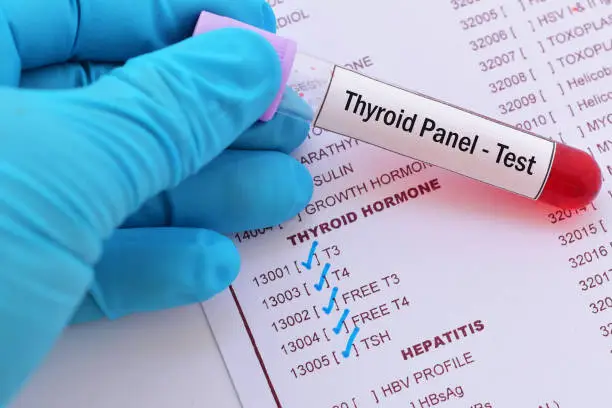
Mechanisms of Drug Interference With Thyroid Function Tests
Inhibition of thyroid hormone synthesis or release
Alteration of peripheral metabolism (inhibition of T4 to T3 conversion)
Changes in thyroid hormone binding to transport proteins (e.g., thyroid-binding globulin)
Effects on pituitary TSH secretion
Laboratory assay interference
10 Common Drugs That Affect Thyroid Function Tests.
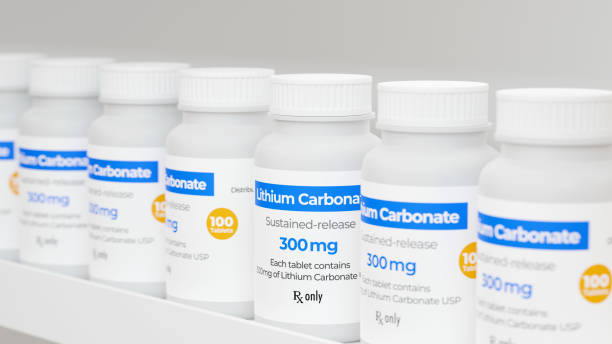
1. Lithium
Lithium, widely used in psychiatry for bipolar disorder, is one of the classic drugs that affects thyroid function tests. It:
- Inhibits thyroid hormone secretion.
- Can cause elevated TSH (suggestive of hypothyroidism).
- Long term use can cause goiter or overt hypothyroidism.
A patient case: I once evaluated a young woman on lithium whose TSH was 8 mIU/L, yet she had no symptoms. After considering her drug history, we monitored her instead of immediately starting thyroid medication.
2. Amiodarone
A potent antiarrhythmic drug, amiodarone is rich in iodine and has several thyroid effects:
- Inhibits the conversion of T4 to T3
- Can cause hypothyroidism or hyperthyroidism.
- Alterates thyroid test patterns even without medical illness.
According to a Mayo Clinic study, 14-18% of patients taking amiodarone develop thyroid abnormalities (Mayo Clinic Proceedings, 2020).
3. Glucocorticoids (e.g., prednisone, dexamethasone)
- These drugs suppress TSH secretion at the pituitary level.
- May falsely suggest central hypothyroidism.
- Usually reversible after steroids are discontinued.
4. Dopamine and dopamine agonists
Used in critical care or Parkinson’s disease, dopamine decreases TSH secretion.
Low TSH may mimic hyperthyroidism.
Clinical correlation is necessary before labeling as thyroid disease.
5. Biotin supplements
- Widely used for “hair and nail health,” biotin is notorious for interfering with assays.
- Causes falsely low TSH and falsely high T4/T3.
The FDA has issued a warning about this risk (FDA, 2019).
6. Immune Checkpoint Inhibitors
- Cancer immunotherapy (e.g., pembrolizumab, nivolumab) can cause immune mediated thyroiditis.
- May manifest as hypothyroidism after transient hyperthyroidism.
- Increasingly recognized as a cause of abnormal TFTs in oncology patients.
7. Estrogens and androgens
These affect thyroid binding globulin (TBG) levels.
- Estrogens increase TBG → higher total T4 (but free T4 normal).
- Androgens decrease TBG → lower total T4.
Important when interpreting results in women on hormone therapy.
8. Beta blockers
- Propranolol is known to inhibit the peripheral conversion of T4 → T3.
- Other beta blockers (such as atenolol and metoprolol) may have milder effects but may still slightly alter thyroid test readings.
- In hyperthyroidism, propranolol is used intentionally to reduce symptoms and eliminate excess T3 activity.
9. Antacids (sucralphate, aluminum hydroxide, magnesium hydroxide)
These agents bind thyroxine in the gut, reducing absorption.
Conclusion: Patients may show persistently high TSH despite taking levothyroxine.
Clinical tip: Separate levothyroxine from antacids by at least 4 hours.
10. Supplements (Iron and Calcium)
Iron supplements (ferrous sulfate) and calcium carbonate significantly affect the absorption of levothyroxine.
WHO data shows that up to 20-30% of hypothyroid patients on levothyroxine are most controlled due to unrecognized supplement interactions.
Best practice: Take levothyroxine on an empty stomach, wait 30-60 minutes before food or supplements.
A rarely discussed insight: The doctor’s perspective
An overlooked insight is that polypharmacy adds to the challenge.
Elderly patients on multiple medications may have multiple layers of interference.
For example, a heart patient on amiodarone, beta blockers, and steroids may show a completely misleading TFT profile.
Another point of discussion: the timing of the blood test matters.
- Biotin should ideally be stopped 48-72 hours before testing.
- Steroid doses related to blood loss can alter TSH readings.
These nuances are rarely highlighted in patient education blogs but are important in real world practice.
Clinical implications
Failure to recognize medications that affect thyroid function tests can lead to:
- Unnecessary initiation of thyroid medications.
- Missing drug induced thyroid dysfunction.
- Anxiety and repeated testing for patients.
For more exploration, see my blogs [Causes of Hyperthyroidism in Females] and [Best supplements for hyperthyroidism].
Practical advice for patients and clinicians
- Always inform your doctor about all medications and supplements you are taking.
- Avoid taking biotin before a thyroid test.
- Clinicians should repeat the test after adjusting for suspected medication effects.
- Use free hormone levels (FT4, FT3) along with TSH in complex cases.
Read in Detail: How to maintain normal TSH level.
Summary
Drugs that affect thyroid function tests include lithium, amiodarone, glucocorticoids, dopamine, biotin, checkpoint inhibitors, and sex hormones. They can increase or decrease TSH, distort T3/T4, or interfere with laboratory assays. Interpreting results without considering medications can lead to errors in diagnosis.
References:
American Thyroid Association (ATA) – Medications that can interfere with thyroid hormone replacement
PubMed (NIH) – Drug effects on thyroid function tests: a review
Conclusion
As a physician, I emphasize that numbers alone never tell the whole story. Drugs that affect thyroid function tests are a common but under recognized cause of confusing laboratory results. If you or your loved one is taking supplements such as lithium, amiodarone, steroids, or biotin, always share this information with your physician.
Have you ever had an abnormal thyroid test while on medication? Share your experience or questions in the comments below. If you are concerned about your thyroid results, consider consulting a doctor for appropriate guidance.
FAQS
Yes. Immune checkpoint inhibitors often trigger thyroiditis, leading to fluctuating TSH and hormone levels. Endocrinology follow-up is usually needed during cancer therapy.
Glucocorticoids and dopamine agonists may reduce TSH secretion without clinical hypothyroidism
Not at the same time. Calcium, iron, and antacids reduce absorption. Separate by at least 4 hours.
- p]:pt-0 [&>p]:mb-2 [&>p]:my-0″>
Yes, some drugs interfere with assay methods or hormone-binding proteins, leading to false positives or negatives in TFTs, even when thyroid function is normal.
Usually every 6–8 weeks after any dose change. Once stable, once or twice per year is enough
🧑⚕️ About the Author
Dr. Asif, MBBS, MHPE
Dr. Asif is a medical doctor and medical educationist with expertise in simplifying complex health topics for the general public. With a passion for preventive health and evidence-based writing, he helps readers make informed choices about their well-being.
✅ Medically Reviewed By
Dr. T.G., MBBS, FCPS (Endocrinology)
Associate Professor, Endocrinology Ward, HMC Hospital
With over 20 years of clinical experience in managing endocrine disorders, Dr. T.G. ensures that the content is accurate, reliable, and clinically relevant.
⚠️ Medical Disclaimer
This blog is intended for educational and informational purposes only. It is not a substitute for professional medical advice, diagnosis, or treatment. Always seek the advice of your physician or another qualified healthcare provider with any questions you may have regarding a medical condition. Never disregard or delay medical advice based on content you read here.
Leave a Reply