

Introduction
Causes of chronic diarrhea in children can be distressing for any parent, especially when the problem doesn’t go away after a few days. Occasional loose stools are common in children, but when diarrhea lasts for more than two weeks, doctors call it chronic diarrhea. At that point, it’s no longer just a simple stomach bug it could be a sign of an underlying condition that requires medical attention.
As a licensed physician and medical educator, I often meet parents who feel anxious and helpless in such situations. My goal with this article is to explain the causes of chronic diarrhea in children in clear, simple language, using relevant examples and practical advice the same way I guide parents in my clinic.
What are the causes of chronic diarrhea in children?
Chronic diarrhea in children refers to loose or watery stools that last more than 14 days. The most common causes include persistent infections, lactose intolerance, celiac disease, irritable bowel syndrome (IBS), inflammatory bowel disease (IBD), food allergies, side effects of medications (such as antibiotics), and malabsorption problems such as pancreatic insufficiency. In some cases, hormonal or metabolic problems such as hyperthyroidism may also play a role.
Rarely, chronic diarrhea can indicate more serious conditions such as intestinal tumors or immune system disorders. If diarrhea is prolonged, especially with blood, weight loss, or dehydration, parents should see a doctor immediately.
Understanding Chronic Diarrhea in Children
Chronic diarrhea in children is often more than just watery stools. It represents a symptom of an underlying problem in the digestive system. Unlike short term infections, this condition is often persistent because something is interfering with how the intestine absorbs water and nutrients.
Think of your child’s intestines as a sponge under normal circumstances, they absorb fluids and nutrients efficiently. In chronic diarrhea, the sponge becomes leaky, leading to nutrient deficiencies, dehydration and growth problems.
Causes of chronic diarrhea in children
Here are the major causes of chronic diarrhea in children, explained in parent friendly terms:
1. Persistent infection
Even after a roundworm has cleared, some parasites (such as Giardia lamblia) or bacteria can continue to irritate the intestines. These infections are common in areas where drinking water is unsafe.
2. Food intolerance
The most common is lactose intolerance the body struggles to digest the sugar in milk, causing watery stools after eating dairy.
Read in Detail About: Foods to Avoid in Lactose Intolerance
3. Celiac disease
This autoimmune condition is caused by gluten (found in wheat, rye, barley). In children, it causes chronic diarrhea, bloating, and poor growth.

4. Irritable bowel syndrome (IBS)
Although most often discussed in adults, IBS can also affect children. It causes alternating bouts of diarrhea and constipation, often worsened by stress or certain foods.
5. Inflammatory bowel disease (IBD)
Conditions such as Crohn’s disease and ulcerative colitis cause chronic inflammation in the intestine. In children, this can cause bloody diarrhea, abdominal pain, and weight loss.
6. Malabsorption problems
When the pancreas or liver does not function properly, children cannot absorb fats and nutrients, which causes yellow stools.
7. Food allergies
Allergies to cow’s milk protein, soy, or eggs can manifest as diarrhea that persists until the offending food is removed.
8. Side effects of medications
Antibiotics and certain antacids can disrupt the balance of the intestines, causing prolonged diarrhea. [Read in Detail About: Diarrhea after antibiotics]
9. Hormonal or metabolic disorders
Conditions such as hyperthyroidism (overactive thyroid) can speed up digestion, leading to chronic diarrhea in children.

10. Rare but serious causes
Intestinal tumors, immune deficiencies, or chronic liver diseases can present with prolonged diarrhea, although these are much less common.
10 Warning Signs Parents Must Watch For
When it comes to chronic diarrhea in children, parents should not ignore these red flags:
- Diarrhea lasting more than 2 weeks.
- Blood in the stool (bloody diarrhea in children)
- Severe dehydration: dry mouth, sunken eyes, little urine
- Weight loss or poor growth
- Persistent abdominal pain
- High fever that does not go away.
- Fatty, foul smelling stool
- Nocturnal diarrhea (wakes the child up from sleep)
- Family history of digestive disease (IBD, celiac)
- Failure to respond to usual treatments.
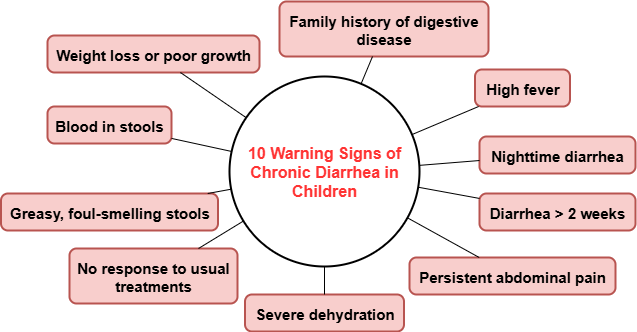
Diseases Associated with Warning Signs of Chronic Diarrhea in Children
Recognizing the causes of chronic diarrhea in children is only the first step. The real concern is when these 10 warning signs appear, as they could indicate a more serious underlying condition. Here’s how each red flag relates to possible conditions:
- Diarrhea lasting more than 2 weeks → often indicates a persistent infection, celiac disease, or irritable bowel syndrome (IBS).
- Blood in the stool → may indicate an inflammatory bowel disease (IBD) such as Crohn’s disease or ulcerative colitis, or a severe bacterial infection such as E. coli or Shigella.
- Severe dehydration → suggests uncontrolled infectious diarrhea or malabsorption, which can quickly become life-threatening if left untreated.
- Weight loss or poor growth → a classic feature of celiac disease, IBD, or a malabsorption disorder.
- Persistent abdominal pain → May be associated with IBD, food allergies, or chronic infections.
- High fever → Often occurs with infectious diarrhea (bacterial or parasitic) or chronic inflammatory conditions.
- Greasy, foul smelling stools → Indicate pancreatic insufficiency (such as cystic fibrosis) or fat malabsorption.
- Nocturnal diarrhea → Red flag for IBD or malabsorption syndrome, as functional causes such as IBS usually do not wake children from sleep.
- Family history of digestive disease → Strongly increases risk of celiac disease, IBD, or lactose intolerance.
- No response to usual treatments → Often indicates rare conditions such as immune deficiency, metabolic disorders, or chronic liver disease.
A Doctor’s Unique Insight
One thing I see often in my clinic and rarely mentioned online is that chronic diarrhea in children can sometimes be the first sign of emotional stress. Children who are under stress (school stress, bullying, or family tension) can develop symptoms similar to IBS. These issues improve when we focus on the child’s mental well-being, not just the gut.
That’s why I always ask about the child’s daily routine, emotions, and school life during consultations.
Diagnosis: How do doctors investigate chronic diarrhea?
Medical History and Examination
Questions about diet, travel history, recent medications, and family medical history.
Stool tests
To check for parasites, blood, fat content, or bacteria.
Blood tests
To look for anemia, thyroid problems, or markers of celiac/IBD.
Imaging and endoscopy
If needed, an ultrasound or colonoscopy may be recommended.
Treatment methods
Treatment depends on the underlying cause:
- Infections → Antibiotics or antiparasitic medications.
- Food intolerance/allergy → Dietary elimination.
- IBD → Anti-inflammatory medications
- Dehydration → Oral rehydration solution (ORS).
- General gut health → Probiotic-rich foods ( [Fiber-rich foods], [Gastritis-friendly foods]).
Parents should never give anti diarrhea medications without a doctor’s advice, as they can worsen certain infections.
Prevention tips for parents
- Wash hands regularly and teach children good hygiene.
- Ensure clean drinking water.
- Avoid overuse of antibiotics.
- Gradually introduce high fiber foods ([foods that relieve gas and bloating]) to improve digestion.
- Keep vaccines up to date (the rotavirus vaccine significantly reduces diarrhea in children [CDC]).
Final thoughts
Chronic diarrhea in children is a warning sign parents should never ignore. While many causes are manageable, if left untreated, the condition can affect development and long term health. By recognizing the causes, monitoring for warning signs, and seeking timely medical help, parents can protect their child’s health.
Call to Action
Have you ever struggled with chronic diarrhea in your child? Share your experience in the comments your story may help other parents.
If your child has ongoing diarrhea or has symptoms related to it, don’t delay. Consult your doctor today for a personalized diagnosis.
Reference
Centers for Disease Control and Prevention (CDC) – Diarrhea: Common Illness, Global Killer
🔗 https://www.cdc.gov/diarrhea
FAQS
Yes, stress can trigger digestive changes in children. Conditions like irritable bowel syndrome (IBS) are often linked to stress, school pressure, or emotional struggles. Addressing both physical and emotional health helps manage symptoms.
Yes. Bloody diarrhea in children should always be taken seriously. It can be caused by bacterial infections, IBD, or, in rare cases, more serious intestinal problems. If you see blood in your child’s stool, seek medical care immediately.
The most common causes include persistent infections, lactose intolerance, celiac disease, irritable bowel syndrome (IBS), and food allergies. Inflammatory bowel disease (IBD) can also lead to prolonged diarrhea. Less common causes include hormonal issues and rare intestinal diseases.
Offer small, frequent meals. Include bananas, rice, applesauce, and toast (BRAT diet). Probiotic yogurt may help restore healthy gut bacteria. Avoid greasy, sugary, and spicy foods. Always discuss long-term dietary changes with your pediatrician.
There is no single “best” medicine. Treatment depends on the cause. For example, antibiotics treat bacterial infections, while dietary changes help with lactose intolerance or celiac disease. Over-the-counter anti-diarrheals should not be used in children without medical advice.
🧑⚕️ About the Author
Dr. Asif, MBBS, MHPE
Dr. Asif is a licensed medical doctor and qualified medical educationist with a Master’s in Health Professions Education (MHPE) and 18 years of clinical experience. He specializes in gut health and mental wellness. Through his blogs, Dr. Asif shares evidence-based insights to empower readers with practical, trustworthy health information for a better, healthier life.
⚠️ Medical Disclaimer
This blog is intended for educational and informational purposes only. It is not a substitute for professional medical advice, diagnosis, or treatment. Always seek the advice of your physician or another qualified healthcare provider with any questions you may have regarding a medical condition. Never disregard or delay medical advice based on content you read here.
Leave a Reply