

Introduction
Colonoscopy screening guidelines are an essential part of preventive health care, helping doctors detect colon cancer, polyps, and other serious conditions at an early stage. As a doctor, I often hear patients worry about when and why they should have a colonoscopy. The truth is, timely screening can save lives by catching problems before they become life threatening. In this article, we’ll review the updated recommendations, starting age, importance of colonoscopy, and practical tips for patients preparing for this important test.
What are the colonoscopy screening guidelines?
The 2025 colonoscopy screening guidelines recommend starting colonoscopy at age 45 for average risk adults and earlier for those with a family history or other risk factors. If the results are normal, the procedure should be repeated every 10 years. Patients at higher risk may need earlier and more frequent screening.
Why colonoscopy screening matters.
Colorectal cancer is the second leading cause of cancer death worldwide, but it is one of the most preventable cancers. According to the CDC, about 150,000 new cases of colorectal cancer are diagnosed in the United States each year, and about 52,000 people die from it annually. Screening with colonoscopy not only detects cancer early but also prevents it by removing polyps before they become cancerous.
Unique clinical insight: In my clinical practice, I have met patients who delayed having a colonoscopy because they felt they were “healthy.” Sadly, some of them were later diagnosed with advanced colorectal cancer. Absence of symptoms does not mean absence of disease this is the biggest misconception that screening guidelines are designed to correct.
Read about how the colonoscopy is performed here
Colonoscopy Screening Guidelines 2025: Important Updates
The 2025 colonoscopy screening guidelines emphasize early and individualized screening. Here’s what you need to know:
1. Colonoscopy screening starting Age
- Average Risk Adults: Screening begins at age 45 (earlier at age 50).
- High Risk Adults: Screening may begin at age 40 or earlier if:
- A first degree relative (parent, sibling, child) was diagnosed with colorectal cancer before age 60.
- Multiple members of your family have had colorectal cancer.
- You have a personal history of inflammatory bowel disease, polyps, or an inherited syndrome (such as Lynch syndrome).
2. How often should colonoscopy be repeated?
- Normal colonoscopy findings: Every 10 years.
- One or two small adenomas (benign polyps): Every 5-7 years.
- Advanced adenomas or multiple polyps: Every 3 years.
- Inflammatory bowel disease or hereditary syndromes: Sometimes every 1-2 years, depending on severity.
3. Why was the age lowered to 45?
Several studies, including a large scale analysis published in PubMed (2022), have found that colorectal cancer rates are increasing rapidly in people under 50. Between 1995 and 2019, the incidence increased by almost 50% in adults aged 40-49. This has prompted medical societies like the American Cancer Society to recommend lowering the age to 45 – and the 2025 guidelines confirm this.
4. The importance of colonoscopy vs. other screening tests
There are several options for colorectal screening, such as:
- Fecal immunochemical test (FIT) – tests for blood in the stool.
- Stool DNA test (Cologuard®) – detects abnormal DNA linked to cancer.
- Flexible sigmoidoscopy – examines a section of the large intestine.
But here’s the key difference: Colonoscopy allows for both the detection and removal of polyps in a single procedure. This makes it the gold standard. Other tests are useful, but if positive, they still require a follow up colonoscopy.
Colonoscopy Screening Guidelines for High Risks Population 2025
1. Colonoscopy Screening for positive Family History of Colorectal Cancer
- Start at age 40 or 10 years before the youngest family member was diagnosed (whichever comes first).
- Repeat every 5 years instead of 10.
2. Colonoscopy Screening for Patients with Inflammatory Bowel Disease (IBD)
- Start colonoscopy 8-10 years after diagnosis of Crohn’s disease or ulcerative colitis.
- Repeat every 1-2 years depending on severity.
3. Elderly patients
- After age 75, decisions should be individualized based on overall health, life expectancy, and previous colonoscopy results.
- After age 85, routine screening is generally not recommended.
4. Colonoscopy Screening For Patients Who Have Had Certain Types of Polyps Removed
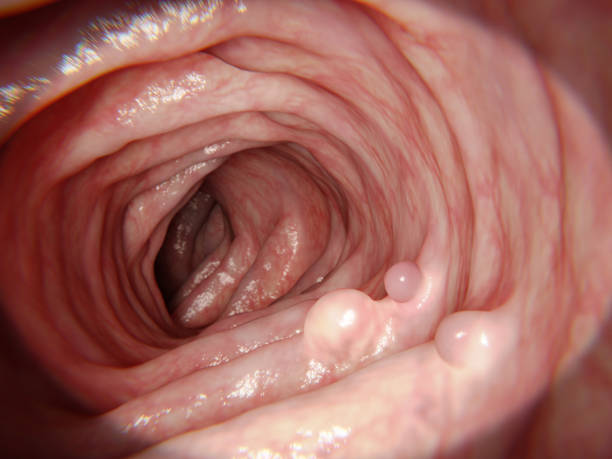
If you have had adenomatous polyps, serrated polyps, or large/advanced polyps removed during a colonoscopy, your follow-up schedule will be shorter than the general 10 years interval. Most guidelines recommend a repeat colonoscopy in 3–5 years, depending on the type, size, and number of polyps. This close monitoring helps detect and remove new polyps before they progress.
5. People Who Have Had Colon or Rectal Cancer
Individuals who have been treated for colon or rectal cancer require more intensive surveillance. The first colonoscopy is usually performed one year after surgery, followed by repeat procedures at 3 years, and then every 5 years if no abnormalities are found. This schedule ensures early detection of recurrence or new cancer development.
6. People Who Have Had Radiation to the Abdomen or Pelvic Area
Radiation therapy to the abdomen or pelvis for cancers such as cervical, prostate, or testicular cancer increases the risk of colorectal cancer. Guidelines generally recommend beginning colonoscopy 5 years after radiation treatment or at age 30 (whichever is later), with follow up colonoscopies every 3–5 years.
7. People Known or Suspected to Have Certain Genetic Syndromes
Some inherited syndromes significantly raise the risk of colorectal cancer:
Lynch syndrome (Hereditary Nonpolyposis Colorectal Cancer HNPCC): Colonoscopy every 1–2 years starting at age 20–25, or 2–5 years earlier than the youngest case in the family.
Familial Adenomatous Polyposis (FAP): Flexible sigmoidoscopy or colonoscopy starting in teenage years (10–12 years old), often yearly. Surgery may be recommended to prevent cancer.
Peutz Jeghers syndrome & MUTYH associated polyposis: Screening often begins in adolescence, with colonoscopy every 1–3 years depending on findings.
Genetic syndromes require personalized care and genetic counseling, as standard guidelines do not apply.
Colonoscopy Safety and Risks
While colonoscopy is safe, patients often ask about the risks. Complications are rare less than 0.1% risk of perforation and 0.2% risk of bleeding (CDC data). Read complete details about risks and complications of colonoscopy here.
How to prepare for a colonoscopy
Preparation is often considered the most difficult part of the procedure, but it’s essential for accuracy. A poorly cleansed colon can hide polyps.
Tips for effective preparation:
- Follow the recommended instructions for your bowel preparation solution.
- Avoid solid foods the day before.
- Stay hydrated with clear liquids.
- Arrange for someone to drive you home afterward.
Read my detailed guide to preparing for a colonoscopy
Unique insight: Psychological barrier
In my experience, many patients dread colonoscopy more than the disease itself. Discomfort, embarrassment, or concerns about the results often delay screening. However, with modern sedation and compassionate care, most patients report that the procedure was easier than expected. Overcoming this psychological barrier is as important as following the medical instructions themselves.
CDC – Colorectal Cancer Screening
Final Thoughts
Don’t Miss These Key Points
Start screening at 45 (earlier if you have family history or risk factors).
Repeat colonoscopy every 10 years for average risk, sooner if you’ve had polyps, cancer, or belong to high risk groups.
Special populations (previous cancer, radiation, genetic syndromes) need personalized plans.
Colonoscopy prevents cancer by removing polyps before they turn dangerous.
Prep well, live healthy both make your results more effective.
Don’t wait for symptoms. Talk to your doctor and protect your future health today.
Call to Action
Have questions about colonoscopy screening? Leave them in the comments, share your experience, or talk to your doctor about when you should schedule your screening. Taking this step could save your life or the life of someone you love.
For average-risk adults, the first colonoscopy is recommended at age 45. High-risk individuals may need it earlier—sometimes even in their 20s or 30s.
In many countries, including the U.S., colonoscopy is covered as a preventive service. Always confirm with your provider.
If no polyps are found, every 10 years. With polyps, your doctor may recommend 3–5 year intervals.
Skipping it increases your risk of undetected cancer. Other tests exist, but abnormal results will still lead to colonoscopy.
Sometimes, doctors may repeat the colonoscopy sooner because poor prep can hide polyps.
🧑⚕️ About the Author
Dr. Asif, MBBS, MHPE
Dr. Asif is a licensed medical doctor and qualified medical educationist with a Master’s in Health Professions Education (MHPE) and 18 years of clinical experience. He specializes in gut health and mental wellness. Through his blogs, Dr. Asif shares evidence based insights to empower readers with practical, trustworthy health information for a better, healthier life.
⚠️ Medical Disclaimer
This blog is intended for educational and informational purposes only. It is not a substitute for professional medical advice, diagnosis, or treatment. Always seek the advice of your physician or another qualified healthcare provider with any questions you may have regarding a medical condition. Never disregard or delay medical advice based on content you read here.
Leave a Reply